Updated
What is the G-Spot and Why It Can Feel Different
Learning how to find and enjoy your G-Spot starts with knowing what you're actually feeling for: a sensitive, often spongier-feeling patch on the front wall of the vagina, usually a couple of inches in, behind the pubic bone. Researchers describe this area as part of the internal clitoral and urethral tissue that sits close to the surface, rather than a separate organ sitting on its own. The name comes from Ernst Gräfenberg, a physician who described this area's sensitivity back in 1950, and later researchers gave it the "G-Spot" label in his honor, a history documented by Arizona State University's Embryo Project Encyclopedia.
Not everyone finds this spot equally sensitive, and that's simply a normal part of anatomy. For some people, pressure here feels more intense, or located differently, than clitoral touch. Some people feel a noticeable difference, while others barely notice it. Both are completely normal.
Because this area sits over part of the urethral sponge, the tissue that surrounds the urethra, stimulating it can also lead some people to release fluid from the nearby Skene's glands, an experience commonly called squirting. Cleveland Clinic's patient guidance on vulva anatomy confirms this connection. It happens for some people and not others, and neither outcome says anything about how much pleasure you're having.
How to Find Your G-Spot With Your Fingers
Give yourself time to get aroused before you go looking. General arousal increases blood flow to the area, which tends to make it both easier to locate and more pleasurable to touch, whether you're exploring solo or with a partner. Once you're turned on, insert one or two fingers, palm facing up, and reach toward the front vaginal wall, roughly one to three inches in. Curl your fingers up and toward yourself in a "come hither" motion, the same gesture you'd use to wave someone closer.
Feel for a patch that's noticeably different from the surrounding tissue: more spongy, or textured with a slight ridge, compared to the smoother walls around it. It can take a few tries to learn what that difference feels like for your own body, and that's completely normal.
Because this spot sits so close to the bladder, pressing on it can create a sudden urge to pee. That's just anatomy at work: the pressure spreads to nearby structures, not an actual need to use the bathroom. Most people find the sensation fades within a few seconds as stimulation continues, often shifting toward pleasure instead.
Dr. Jenni Skyler, the resident sexologist at Adam & Eve, points out that no two G-Spots respond to touch in quite the same way, so a technique that works well for one person's body may need adjusting for another's. There's no pressure to get everything figured out right away. Take your time and see what feels good.
Ways to Stimulate the G-Spot: Fingers, Positions, and Toys
Fingers remain the most direct way to find this spot, whether you're doing the exploring yourself or guiding a partner's hand. Talk through what you're feeling as you go, and remember that a partner should always wait for your go-ahead rather than guess.
Positions can also angle the body so penetration naturally presses toward the front vaginal wall, without any extra hand coordination. A few options worth trying include Legs Back Launch Pad and Covered Bridge, both missionary variations that tilt the hips upward, and Lazy Doggy and Cat's Meow, two doggy-style variations that change depth and angle by lowering the chest or shifting the hips. What works for one person might not work for another, so don't be afraid to experiment a little.
Toys are the third option, and they can help when fingers alone feel like they take too much coordination to sustain, or when you'd simply rather not hold a precise angle for long.
Staying Comfortable and Relaxed During G-Spot Play
There's no need to rush. Give yourself time to relax, build arousal, and get comfortable before exploring G-spot stimulation. Taking things slowly and paying attention to how your body responds can make the experience more enjoyable, especially if you're still figuring out what feels good.
A little extra lube can help, too. If things feel dry or there's more friction than you'd like, a water-based lubricant is a good place to start. It's easy to clean up and works with most toys. Silicone-based lubricant tends to last longer, but check the toy manufacturer's instructions to make sure it's compatible with your toy. The goal is to keep things comfortable, not to push through friction.
If you're exploring with a partner, speak up about what feels good and what doesn't. A simple “slower, please,” “that doesn't feel right,” or “let's take a break” is all you need. Good communication makes it easier for both of you to relax, adjust, and enjoy the experience at your own pace.
What to Expect and When to Take a Break
The G-Spot is a bit of a scientific debate. Researchers haven't reached a consensus on whether it's a distinct anatomical structure or an area where sensitive tissues work together to create pleasurable sensations. Some studies haven't found evidence of a separate structure, which may help explain why not everyone experiences the G-Spot as one specific, easy-to-find spot.
For some people, G-Spot stimulation feels especially pleasurable or different from clitoral stimulation. Others notice a sense of fullness, a stronger wave of pleasure, or fluid release. Experiences vary from person to person, though, and there's no single sensation you need to feel for the experience to be enjoyable.
It's also important to know the difference between pressure and pain. A feeling of fullness or comfortable pressure may be part of the experience, but sharp or persistent pain is a sign to stop. If pain keeps happening, check in with a healthcare professional to find out what's going on.
G-Spot Vibrators, Dildos, and Other Toys Worth Trying
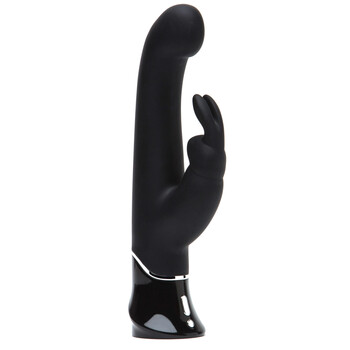
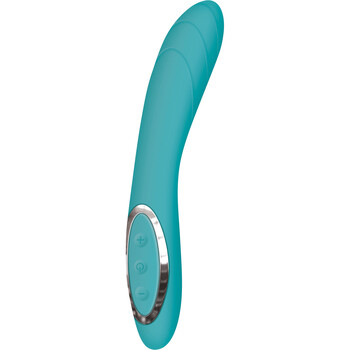
When fingers alone aren't quite reaching what you're after, G-spot vibrators are specifically built for the job as they feature that curved shaft that holds its shape against the front vaginal wall to give your hand a break. The Fifty Shades of Grey Greedy Girl G-Spot Rabbit Vibrator pairs that curved shaft with an external arm for clitoral stimulation at the same time, which some people like for layering both kinds of sensation at once. If you'd rather keep the shape simple, the Adam & Eve Rechargeable G-Gasm Curve is a straightforward curved-shaft design built for the same purpose.
Prefer no motor? A G-spot dildo gives you the same curved shape for manual or partnered thrusting play and let's you go at your own speed.
A wand massager takes a different approach. Its flexible neck and broad head are built mainly for external use, though some people brace the head against the pubic bone for indirect pressure in the same general area.
Many people enjoy combining G-Spot and clitoral stimulation, so don't feel like you have to pick one over the other. And if this kind of internal exploration has you curious about other sensitive areas, how to find the A-spot is worth a look too.