What to Look For in the Best Nipple Clamps
Not all nipple clamps feel the same, and finding your favorite comes down to a few things: how much pressure you like, whether you can adjust it, and what material feels best against your skin. Some styles let you control the pressure, while others change how they feel with movement. From soft-tipped designs to sleek metal styles, the right fit depends on your comfort level, preferences, and the kind of sensation you're looking for. Let's break down what to consider so you can find your match.
Mechanism. Some clamps use a slider or screw you move yourself, so you control the pressure, easing it up or releasing it whenever you want. Others use a fixed-tension design built more for decorative variety than for fine-tuned intensity.
Tip material. Rubber-tipped clamps spread pressure more gently across the skin, which tends to suit those using clamps for the first-time or those who may have more sensitivity. Bare metal or jeweled designs lean toward a sharper, more concentrated sensation and read more decorative than functional.
Adjustability and fit. A slider that travels the length of the clamp can accommodate a wider range of nipple sizes than a fixed clip, which matters if you or a partner have different sensitivity or size.
Beginner-friendly options. New to nipple clamps? Look for an adjustable style that lets you start with gentle pressure and make small changes as you get comfortable. Starting slowly and keeping your first try short can help you figure out what feels good without jumping straight into a more intense sensation.
The Main Types of Nipple Clamps
Nipple clamps come in several styles, and each offers a slightly different experience. Tweezer-style clamps are simple and lightweight, while screw- and slider-adjustable designs let you fine-tune the pressure. Clover clamps respond to pulling or tension, and magnetic styles use magnets to create their grip. You’ll also find options with decorative details, vibrations, or suction for something a little different.
So, which style is right for you? It helps to look at how each clamp works, how much control you have over the pressure, and whether you prefer a simple design or something with extra flair.
Finding the Right Nipple Clamps for You
If having control over pressure is important to you, adjustable nipple clamps are a good place to start. Two options at Adam & Eve use a slider mechanism, rubber tips, and dangling beads, but they have slightly different designs.
Adjustable Nipple Clamps
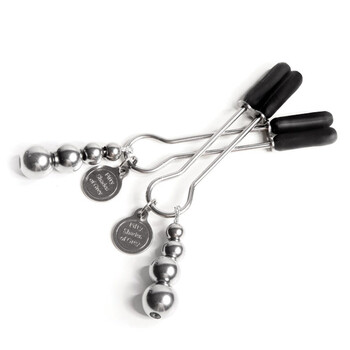
Fifty Shades of Grey The Pinch Adjustable Nipple Clamps feature a simple slider that lets you increase or ease off the pressure. Rubber tips provide a barrier between the metal and your skin, while dangling beads add a little movement. The clamps measure 2.25 inches, with an overall length of 3.25 inches.
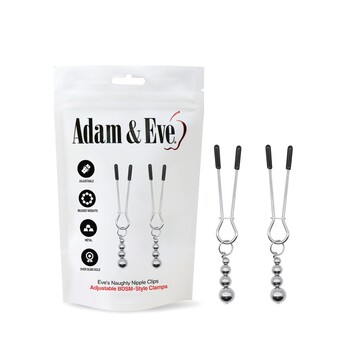
Eve's Naughty Nipple Clamps offer a similar setup, with silver-toned metal, rubber tips, and weighted dangling beads. To use them, loosen the slider, position the clamps, and gradually adjust the pressure to your comfort level. Sliding the mechanism back down releases the pressure. Each clamp measures 2.25 by 0.45 inches, with an overall length of 3.45 inches.
Both styles offer adjustable pressure, so the choice largely comes down to their design and dimensions. If you're comparing the two, consider which look you prefer and how the size and dangling details fit your preferences.
Decorative Nipple Clamps
Prefer a little more personality in your accessories? Adam & Eve also offers several designs with decorative details:
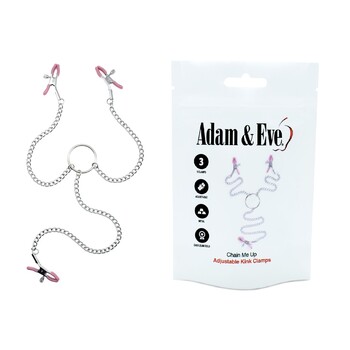
- Adam & Eve Chain Me Up Kink Clamps connect the clamps with a chain for a classic look.
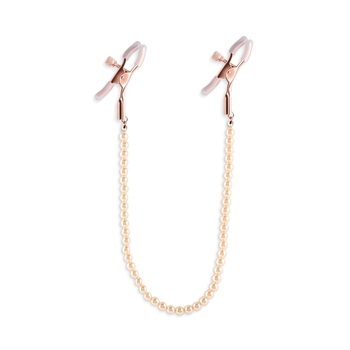
- Bound Pearl Nipple Clamps feature pearl accents for a more ornamental style.
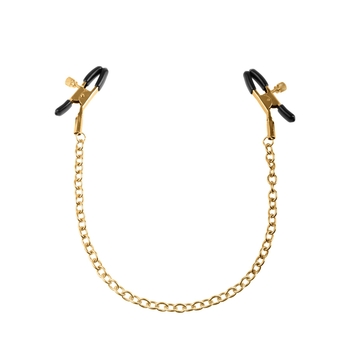
- Fetish Fantasy Gold Nipple Clamps offer a gold-finished design.
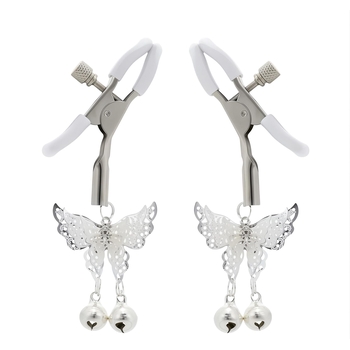
- Butterfly Nipple Clamps bring a playful butterfly motif to the mix.
These styles offer different looks and details, so check each product's design and adjustment features before choosing. If being able to fine-tune pressure is a priority, look for a clamp with a clearly adjustable mechanism rather than choosing by appearance alone.
Ultimately, the best nipple clamps for you are the ones that match your comfort level, preferred style, and desired level of control.
Using Nipple Clamps Comfortably and Safety
Comfort comes down to tip material and how much control you have over pressure once the clamp is on. Rubber tips spread pressure more gently than bare metal, and a slider you can move yourself means you can ease intensity up or down throughout the session instead of committing to one setting.
A little preparation goes a long way toward making nipple clamps more comfortable. And knowing when to adjust or take them off matters just as much as choosing the right pair. Loosen the clamp rather than tugging or pulling it off when you're ready to remove it. Take it off right away if you feel significant pain or numbness, or if the skin under the clamp turns blue, purple, or unusually pale. MedlinePlus, the National Library of Medicine's consumer health resource, confirms that a bluish or purple skin change specifically is a recognized sign of reduced circulation that calls for prompt attention, especially if it happens suddenly or along with other symptoms.
Keep communication open. If you're playing with a partner, talk about boundaries and preferences before you begin, and keep checking in as you go. Consent can change at any time, so either person can pause or stop things whenever they want. Agreeing on a safeword beforehand can also help, especially if you're exploring kink or power play. Another option is a traffic-light system: green means keep going, yellow means slow down or check in, and red means stop.
New to Nipple Clamps? Here's What to Know
The first time you wear nipple clamps, it helps to know that the area can go a little numb almost right away. That's normal, but it also means you can't rely purely on how intense something feels to judge whether the pressure has gotten to be too much. Start with a short session, around five minutes, and a lighter setting than you think you want. Cap even longer sessions at 15 minutes or less, especially with a tighter adjustment. If you and a partner are using a check-in signal like the traffic-light system, lean on that rather than waiting for the sensation itself to tell you something is wrong.
After you remove the clamps, give the area at least 20 to 30 minutes before reapplying, and wait longer if there's any lingering tenderness or if the skin hasn't returned to its normal color. If soreness or discoloration doesn't go away, check in with a healthcare professional.
Shop Nipple Clamps at Adam & Eve
Now that you know what to look for, it's time to explore your options! Browse Adam & Eve's Nipple Clamps & Pasties ccollection to compare adjustable styles, decorative designs, and different materials all in one place. Not sure where to start? Think about the pressure you prefer, the fit you're looking for, and which design catches your eye. You can also explore the Kinky Bondage collection for more accessories to discover.