What Is the Mountain Climber Sex Position?
The mountain climber position is a face-to-face position that uses an incline for support and comfort. One partner reclines against a raised surface, such as a sturdy bed edge, wedge, low chair, or secure stack of pillows, with their knees bent toward their chest. The other partner kneels or crouches between their legs, leaning in for close, face-to-face contact. The kneeling partner uses their legs for balance and leverage, giving the position its mountain-climbing name. And if you were picturing the cardio exercise instead, don't worry! This guide covers the partnered position, from getting set up to finding a comfortable angle.
How to Get Into the Mountain Climber Position
Getting into the mountain climber position is easier when you take it one step at a time. Here's how to get comfortable and find your footing together:
- Pick a firm support for the reclining partner. The edge of a sturdy bed, a wedge, a low chair, or a secured stack of pillows all work, as long as the surface holds steady at a height that feels manageable.
- The reclining partner sits back or leans against that support with knees bent toward the chest, letting the incline take some of the weight so the hips can tilt without strain.
- The kneeling partner moves in between their partner's legs, close enough for face-to-face contact, using their own legs rather than lying flat for balance and support.
- From there, adjust distance, hand placement, and the incline itself until the angle feels right for both of you. There's no fixed setup to match, just the version that works for your bodies.
Mountain Climber Position Variations and Adjustments
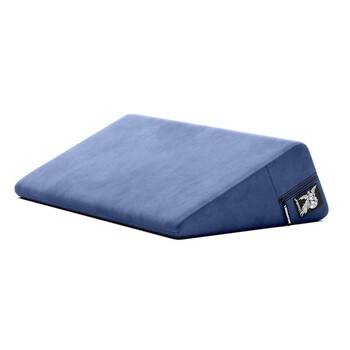
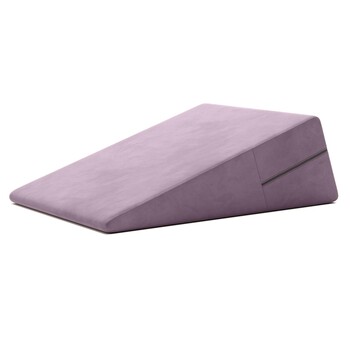
Support firmness changes how much ongoing effort the position takes to hold. A firmer surface, like a furniture edge or a wedge, holds the incline angle with less continuous muscle effort than a soft mattress or a stack of loose pillow. If you're using a wedge, it also tends to stay in place better once you're settled into position.
Incline height changes where and how contact happens between you, which is something some couples find worth exploring. A little more or less recline shifts how the hips line up, and there's no single height that works best for everyone. The right one is simply whichever feels good to you both.
Kneeling stance changes how your weight is distributed. Kneeling closer to or farther from the support, and keeping your knees wider or narrower, shifts how much weight lands on your thighs versus your arms, and small adjustments here can make a real difference in how long the position feels comfortable.
Facing each other keeps your hands free for touch and makes it easier to see and hear one another, so a small vibrator or toy can be worked in without changing the core stance.
Comfort, Consent, and Safety for the Mountain Climber Position
The best way to enjoy the mountain climber position? Make sure you both feel comfortable, supported, and free to speak up. Check in with each other as you go, and remember that either partner can ask to slow down, make an adjustment, or stop at any time. Consent isn't a one-time conversation, and you never have to push through something that doesn't feel right. That's the foundation of the consent guidance from Power to Decide.
A little extra support can go a long way. The kneeling partner needs enough leg and hip stability to stay balanced, while the reclining partner needs a comfortable, supported angle. If either of you has sensitive knees, hip discomfort, or mobility or balance concerns, try adjusting the incline or adding a firmer support. And if the position still feels awkward or uncomfortable? There's nothing wrong with choosing another one that works better for both of you.
Don't forget about lubrication, either. Changing the angle can increase friction, so adding a little lubricant may help things feel smoother and more comfortable. Water-based and silicone-based lubricants are both common options, as Cedars-Sinai explains. Using latex condoms? Stick with water-based or silicone-based formulas, since oil-based products like lotion, petroleum jelly, massage oil, and cooking oil can weaken latex and cause condoms to break.
What to Know Before You Try the Mountain Climber Position
Don't confuse the mountain climber position with the "Magic Mountain" pose. Despite the similar names, Magic Mountain is a different, rear-entry position where one partner leans forward over a support surface while the other kneels behind them. The mountain climber position keeps both partners face-to-face.
Since the mountain climber position relies on balance and leg strength, a sturdy, supportive surface is a smart place to start. Beyond that, focus on what feels comfortable for both of you. There's no need to force a position that isn't working.
Shop Position Aids for the Mountain Climber Position
Because the mountain climber position depends on holding a steady incline, a dedicated support can make that easier than re-stacking pillows every time. Adam & Eve's Liberator position aids section is built for exactly that: wedges and ramps designed to hold an angle with less ongoing effort than a loose pillow stack. If you'd like to try one, browse a Liberator Wedge or a Liberator Ramp, or compare the full Liberator position aids category to find the support that fits your setup.