Updated
How to Last Longer in Bed
Wanting more control over when you finish is common, whether you're new to partnered sex or you've been having it for years. Male adult performers have talked openly about the habits that help them stay present longer, and clinicians have studied several of the same ideas and found real support for them.
A handful of approaches, practiced consistently, have evidence behind them: pausing or easing off stimulation before climax, squeezing briefly to ease the urge, changing position or pace, shifting your focus for a moment, reducing sensitivity with a condom or a desensitizing product, and strengthening the muscles involved through pelvic floor exercises. Everyone’s different, so it may take a little practice to figure out what works best for you. The good news? Each technique gives you a simple place to start.
Practice the Techniques That Build Control
The stop-start method. When you feel yourself getting close, stop all stimulation entirely for about 30 seconds, let the urge ease off, then start again. Repeating this a few times in a session helps you recognize that point earlier each time, building more control as you practice.
The squeeze technique. Instead of stopping completely, squeeze the head of the penis firmly for about 30 seconds as you near climax, until the urge subsides. Some people find this easier to work into a position than a full pause.
Distraction and refocusing. Shifting your attention onto something ordinary and nonsexual for a few seconds, counting backward, naming something in the room, or simply paying attention to your breathing, works on the same principle: it interrupts the build toward climax long enough for you to regain control. One performer, Dick Chibbles, has described using slow, deliberate breathing this way, a personal habit that lines up with the technique described above.
Switching things up. Changing position, angle, tempo, or the type of stimulation you're receiving can lower arousal just enough to buy more time, without stopping the moment altogether. What you switch to is entirely up to you and your partner.
Many people get a feel for these techniques solo first, before bringing them into partnered sex. If you want more ideas for that, our masturbation facts guide is a good place to keep exploring.
Ways to Last Longer: Techniques and Products
Behavioral techniques like stop-start, squeeze, and mindful distraction can help you build better control over time. They’re free, easy to practice on your own or with a partner, and give you a chance to learn what works best for your body.
Pelvic floor exercises, often called Kegels, take a different approach. Rather than managing arousal in the moment, they strengthen the muscles involved in ejaculation over time.
Small studies involving men with lifelong premature ejaculation have found that pelvic floor training may help increase the time before ejaculation, according to a study summary from the European Association of Urology. Results varied, and the small number of participants means more research is needed. A separate peer-reviewed comparative study found that combining pelvic floor exercises with the stop-start technique appeared to work better than stop-start alone. The findings are promising, but the researchers noted that further study is needed.
Adult performer Johnny Goodluck has also credited pelvic floor exercises as part of his personal routine, offering a real-world example of how the technique is used outside clinical research.
Condoms work by lowering sensitivity directly: wearing one decreases sensitivity to the penis and can help delay ejaculation, as Cleveland Clinic describes in its guidance on the technique.
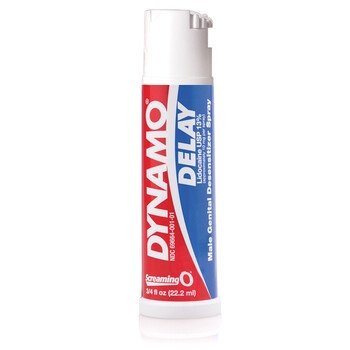
Desensitizing sprays, such as Dynamo Delay Spray, take the same approach a step further. It's a topical, lidocaine-based spray applied directly to the penis that may reduce sensitivity and help delay ejaculation. It works by dialing down sensation rather than training a muscle or a habit, and how much difference it makes varies from person to person.
Comfort, Consent, and Talking With Your Partner
These techniques tend to work best when you're relaxed and in sync with your partner, which is easier when you treat this as something you're exploring together, at a pace that works for both of you. Telling your partner what you're trying and why, whether that's "I want to slow down for a second" or "let's switch to something else for a bit," tends to land better than staying quiet and hoping they don't notice. Most partners appreciate knowing what's going on, and talking about pace openly tends to ease the pressure that often makes timing harder in the first place.
Check in by asking what sounds good, and keep paying attention to how your partner is responding as well as your own timing. Comfort and consent stay active throughout, from start to finish. Either person can pause, slow down, or change course at any point, regardless of who brought it up or what you're doing together.
When You Want a Little More Support
Everyone’s experience with sexual timing is different, and there’s no single “normal” that applies to everyone. Cleveland Clinic describes ejaculating within about a minute of starting intercourse as one clinical benchmark for premature ejaculation, but that doesn’t mean you need to measure your experience against a stopwatch.
If you’ve been practicing these techniques and would like more control, a healthcare professional can help you explore other options. You don’t have to figure it all out on your own.
Explore More Ways to Boost Confidence and Pleasure at Adam & Eve
Finding what works for you may take a little experimenting. Techniques, condoms, and desensitizing products all offer different ways to explore timing and sensitivity, so you can find the approach that feels right for you.
Ready to explore more? Browse sexual wellness at Adam & Eve for products designed to enhance sensation and pleasure. And if you’re looking to bring something new into the bedroom, check out our spicing things up with a partner guides.