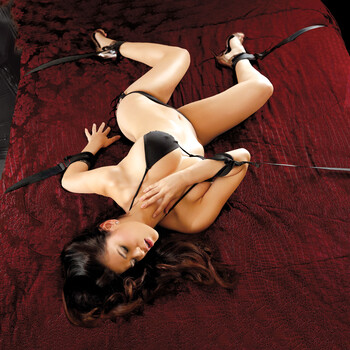
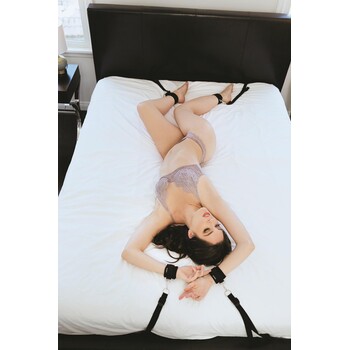
What Are Bondage Toys
Bondage toys are purpose-made gear for consensual restraint and sensation play. They include everything from cuffs and ties that limit movement to blindfolds and gags that temporarily reduce a sense, along with ticklers, teasers, clamps, and other toys designed to create different sensations.
Bondage itself can involve tying, binding, or restraining a partner for erotic or sensory play. Purpose-made gear gives you more control over how it’s used, with adjustable designs and closures that make it easier to change or remove the restraint when needed.
One advantage of purpose-made bondage gear is that it’s designed specifically for restraint, adjustment, and removal. Depending on the toy, you may find buckles, clips, hook-and-loop closures, or other release mechanisms that make it easier to loosen or remove the restraint when needed.
That added control can make trying bondage feel more comfortable, especially if you’re new to it. Before you start, make sure both partners know how the restraint works and how to remove it quickly if someone wants to stop.
If part of what brought you here is wondering whether this is a normal thing to be curious about, it is. In a national survey of 2,021 US adults, about one in five men and one in five women said they had tied up a partner or been tied up at some point in their lives (Herbenick and colleagues, PLoS One). Plenty of people are quietly asking the same question you are, usually long before they buy anything.
Getting Started With Bondage Restraints
Trying restraints for the first time can be as simple as you want it to be. Start by talking about what you’d both like to try, agreeing on a clear way to pause or stop, and choosing a restraint that feels easy to use. There’s no need to make your first experience elaborate. A simple pair of cuffs can be enough to see what you both enjoy.
Before using the restraints, put them on loosely and make sure they feel comfortable. Take a moment to practice the release mechanism, too, so you both know exactly how to remove them if needed. That small step can make the experience feel much more relaxed.
If you’re using wrist or ankle restraints, a bed can be a convenient place to start. Some sets are designed to attach beneath a mattress, including the Under The Bed Restraint System and the Adam & Eve Scarlet Couture Bed Bondage System. You can browse the full selection of handcuffs, restraints, and ties to compare different styles, materials, and closure types before choosing what works for you.
The Four Main Types of Bondage Gear
Bondage gear comes in a lot of different styles, but most options fall into four basic categories. Knowing what each type is designed to do can make it easier to decide what you want to try.
Restraints: Cuffs, ties, bondage tape, and bed restraint systems are designed to limit movement. They range from simple wrist or ankle cuffs to more involved setups, so you can choose how much restraint feels right for you.
Sensory-deprivation gear: Blindfolds, masks, and gags limit sight or sound, putting more focus on touch and anticipation. A blindfold is often an easy way to experiment with this type of play without adding physical restraint.
Teasing and sensation toys: Feathers, ticklers, and similar accessories create light sensations across the skin. They can be used on their own or paired with other bondage gear, such as a blindfold.
Pressure and intensity toys: Nipple clamps, pasties, and similar accessories add focused pressure or sensation to specific areas. Because sensitivity varies from person to person, adjustable options can make it easier to control the intensity.
Within each category, you'll find plenty of variation in materials, designs, and features. If you're choosing restraints, look for options that fit comfortably and have a release mechanism you can use quickly.
You don't have to build a complete setup all at once, either. A simple pair of cuffs or a blindfold can be a starting point, while bondage kits combine several types of gear for anyone who wants to explore more than one style.
How To Use Bondage Gear Safely
Talk about it before you begin. Make sure everyone involved understands what you’re planning to try and agrees to it. Consent is ongoing, which means either person can pause or stop at any point, for any reason. You can also agree on a simple word or signal to make communication easier during play. Some people use a traffic-light system, with “yellow” meaning slow down or check in and “red” meaning stop, but any signal that you both understand works.
Make comfort part of the check-in. Restraints should feel secure without being painfully tight or putting pressure on one area. If you can, leave enough room to slide two fingers underneath a cuff without forcing them. Check in regularly and pay attention to signs such as numbness, tingling, coldness, or changes in skin color. If something feels wrong, loosen or remove the restraint rather than trying to push through it. Our Bondage Tips For Beginners provides more information on how to get started.
If you’re using rope or bondage tape, make sure you have a quick way to release it. Keep safety shears within easy reach, and never leave someone restrained and unattended. The goal is for either person to be able to end the restraint quickly if needed.
Clean your gear after each use. Follow the manufacturer’s care instructions, but many nonporous items can be cleaned with mild soap and water or a suitable toy cleaner. Let everything dry completely before storing it. Pay extra attention to porous materials, which can require more specific care. If a toy or restraint is being shared, clean it thoroughly between users and follow the product’s instructions for the material.
Before You Try Bondage: What to Know
Is being into bondage unusual? Not necessarily. Research suggests that BDSM interests and experiences are more common than you might expect. In a study of a representative sample of adults in Belgium, 46.8% reported having participated in at least one BDSM-related activity at some point in their lives. (Holvoet and colleagues, The Journal of Sexual Medicine). A separate study comparing 902 people who practiced BDSM with 434 who did not found no evidence that BDSM practitioners were generally more psychologically distressed or dysfunctional than the comparison group (Wismeijer and van Assen, The Journal of Sexual Medicine). These studies looked at different populations and measured different things, so they shouldn't be treated as a direct measure of how common bondage is in the U.S. Still, they provide useful context: being curious about bondage doesn't automatically mean there's anything unusual about you.
What does a blindfold add? A blindfold removes sight, which can make other sensations feel more noticeable and add an element of anticipation. You don't have to combine it with restraints or anything more involved—a blindfold can be a simple way to explore sensory play and see whether you enjoy it.
Can you use a necktie or scarf instead of a restraint? It's possible, but purpose-made bondage gear is generally easier to adjust and remove. Knots can tighten when someone pulls against them, while a dedicated restraint typically has a closure designed for quick release. If you're new to bondage, purpose-made cuffs or other adjustable restraints can make it easier to focus on the experience rather than figuring out how to get free.
How much padding should a restraint have? That depends on the product. Some cuffs have soft lining or padding, while others don't, and width can vary as well. Check the product description rather than assuming every restraint will have the same level of cushioning. The most important thing is that the restraint fits securely without causing pain, numbness, tingling, or other discomfort.
What should you start with? There's no need to buy a full collection right away. Adjustable cuffs and a blindfold are two simple options for exploring restraint and sensory play, and you can always add other types of gear later. If you'd rather try several things at once, a bondage kit can combine different types of gear in one set.
Shop Bondage Cuffs, Kits, and Blindfolds
Ready to explore? Start with the type of bondage gear that interests you most. If you like the idea of restraint, browse handcuffs, restraints, and ties to compare different styles and closures. If you’d rather try a few things at once, a bondage kit can include several pieces in one set. And if sensory play sounds more appealing, masks, blindfolds, and gags, are an easy place to start.
Whichever type you choose, check the product details for information about fit, materials, closures, and care. You can also pick up a toy cleaner while you shop so you're ready to clean your gear after use.
Want to learn more before you buy? Our guide to what BDSM is explains the broader terminology, while our bondage toys guide takes a closer look at different types of gear.
When you're ready to browse, explore kinky bondage at Adam & Eve and pick the what you're most curious about.