What BDSM Stands For and What It Actually Means
You may have heard the term BDSM in a movie, a book, online, or from a partner and wondered what it actually means. At its simplest, BDSM is an umbrella term for consensual ways of exploring power, roles, restraint, rules, and sensation between partners. The four letters represent three related pairings: Bondage and Discipline, Dominance and submission, and Sadism and Masochism. You don't have to be interested in every part of BDSM, or even use a label at all, to explore the parts that appeal to you.
The important thing is that BDSM is built around communication and choice. Partners decide together what sounds interesting, what their boundaries are, and how they want to participate. For some people, that might mean taking turns leading or following, playing with rules or restraint, or simply exploring a different dynamic with a partner. There's plenty of room for curiosity, creativity, and play, and everyone's version can look a little different.
Think of BDSM less as a checklist and more as a collection of possibilities. You can explore one dynamic, combine several, or discover that certain parts simply aren't for you. The goal is to find what feels exciting, comfortable, and mutually enjoyable for everyone involved.
Talking About What You Want
A good conversation can make exploring BDSM feel more comfortable, connected, and exciting. Talk about it when you both have time to focus and can be open about what sounds appealing, what you’re unsure about, and where your boundaries are. That way, you can enjoy the experience knowing you’re both on the same page.
You don’t need a contract or a formal agreement. A simple, honest conversation can cover four key things:
- What sounds appealing. Name the specific thing you read about or imagined, rather than just "something kinky."
- What is off the table. These are the hard limits, the acts one of you would refuse outright or would only consider under particular circumstances.
- How you'll stop. Agree on a safe word and a simple nonverbal signal, so you always have a clear way to communicate.
- What you want afterward. Water, quiet, a blanket, a long hug, a conversation, or nothing in particular.
If you're the one raising it, a simple opener does the work. Mentioning that you read something interesting and asking what your partner thinks of it gives both of you room to be honest without anyone having to make a declaration.
Nerves are normal on both sides of that conversation, and saying yes to one idea is never saying yes to everything else. The talk also tends to be its own kind of fun, because you both get to hear what the other has been quietly curious about.
Bondage, Power Play, and Sensation Play
Once you understand the basics, the different sides of BDSM can feel much more approachable. You can explore them in simple ways, with or without accessories, and you can start with whatever sounds most interesting to you and your partner.
Bondage and Discipline can be as simple as adding a little restraint or introducing a playful rule. Soft cuffs, bondage tape, or an under-the-bed restraint system can add something new without changing the rest of your experience. If you're new to restraint, look for options that are comfortable and easy to adjust or remove.
Dominance and submission is about choosing who leads and who follows. It doesn't require any special equipment or a particular setting. You might try taking turns giving directions, letting one partner plan the experience, or simply exploring what it feels like to hand over or take the lead for a little while. A collar or another accessory can add to the feeling, but it's completely optional.
Sensation play adds variety by making touch the focus. A blindfold can heighten anticipation, while a massage candle that melts onto the skin or different textures can encourage you to pay closer attention to how each sensation feels. The idea is simply to explore what you enjoy and discover new ways to connect.
Note: If using a candle, always make sure it's intended for massage and not a typical household candle.
Consent, Safe Words, and Aftercare
Consent is the foundation of any BDSM experience. As Columbia's Go Ask Alice explains, consent should be mutual, enthusiastic, and ongoing. Everyone involved should have a clear understanding of what they want to explore, what their boundaries are, and that they can change their mind at any point. Agreeing to one activity never means agreeing to everything that might come with it.
A safe word gives you an easy, unmistakable way to communicate during play. Choose a word ahead of time that you wouldn't normally use in the moment, so there's no confusion about what you mean. You can also use the familiar traffic-light system: green means keep going, yellow means slow down or check in, and red means stop.
It's also helpful to agree on a nonverbal signal in case speaking isn't practical. This could be a hand gesture, a few taps, or another simple signal that both partners recognize. The important part is agreeing on it beforehand and making sure you can both notice it easily during whatever you're doing.
Good communication doesn't stop once play begins. Check in with each other, pay attention to how things are going, and remember that either person can pause or stop at any time. That freedom is part of what makes exploring together feel comfortable, connected, and fun.
A few practical habits keep the night comfortable for both of you:
- Stay in the room. Never leave a restrained partner alone, even for a minute.
- Keep release fast. Keep safety shears within reach for rope and tape, and choose buckles you can open one-handed for cuffs.
- Watch hands and feet. Numbness, tingling, coldness, or a change in skin color at the wrists or ankles means loosen or release now.
- Leave the neck alone. Anything that restricts breathing has no place in beginner play.
Stopping is always allowed. If something no longer feels comfortable, you can pause or stop at any point, and your partner should respect that choice without pressure. Afterward, take some time to check in with each other and see how you're both feeling. That's the idea behind aftercare, and it can look different for everyone. It may be a glass of water, a blanket, some cuddling, or simply talking about what you enjoyed and what you'd like to try differently next time.
There’s no single right way to do aftercare. What matters is making space for each other after the experience and ending on a note that feels good for both of you.
Common Myths About BDSM
BDSM comes with plenty of assumptions, especially if your only exposure to it has been movies, TV, or the more dramatic versions you see online. In reality, people explore BDSM in many different ways, and there’s no single personality, relationship style, or experience that defines who enjoys it.
Myth: You have to fit a certain type.
There’s no particular personality or relationship style that comes with being interested in BDSM. Curiosity, communication, and a willingness to explore what feels good to you and your partner matter far more than fitting a particular stereotype.
Myth: You have to choose one role.
Not at all. Some people prefer leading, some prefer following, and others enjoy switching between the two. Your preferences can also change depending on the partner, the mood, or the experience you want to have that day.
Myth: BDSM has to hurt.
It doesn't. Bondage can be about restraint, while dominance and submission can focus entirely on roles, communication, and taking the lead. Even when sensation is part of the experience, you get to decide what feels enjoyable and where your boundaries are.
Myth: Almost everyone is doing it, or hardly anyone is.
The answer depends heavily on what researchers count as BDSM. Studies use different definitions and ask about everything from specific BDSM activities to broader forms of rough or adventurous sex, so the numbers can vary dramatically. One review found estimates ranging from relatively small groups reporting recent BDSM activity to much larger numbers reporting at least one BDSM-related experience over their lifetime. A national US survey of 9,029 adults also found that many people reported some form of rough-sex experience, although rough sex and BDSM aren't interchangeable categories.
The takeaway is simple: there’s no “normal” level of interest you need to have, and you don't need to prove anything to anyone. BDSM can be as simple or as playful as you want it to be. Start with what interests you, talk openly with your partner, and leave anything that doesn't appeal to you on the table.
Beginner BDSM Gear: Where to Start
If something in this guide caught your attention, start there. You don't need to build a collection all at once. Choosing one or two things that match what you're curious about is an easy way to see what you enjoy.
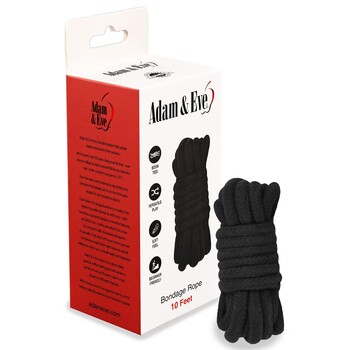
For your first restraint, look for something that's comfortable, easy to adjust, and simple to release. An under-the-bed restraint system is one straightforward option, with straps that tuck beneath the mattress and buckles that make adjustments simple. If you prefer something more flexible and low-key, cuffs or bondage rope can be used in a variety of ways and doesn't require a dedicated setup. Keeping safety shears nearby is also a smart way to make quick removal easy if needed.
If sensation play is what caught your interest, a pinwheel offers another simple way to explore. You control the speed and pressure, making it easy to experiment with different sensations and see what you enjoy.
Not sure which direction you want to try? Bondage kits can be a good way to explore a few styles without choosing each item individually. Look for a combination that appeals to both of you rather than feeling like you need to buy everything at once.
And don't forget the basics. If you're exploring restraint or spending more time on one type of play, having a good personal lubricant nearby can make the experience more comfortable. Start with what interests you, see how it feels, and add from there.
Explore Kinky Bondage at Adam & Eve.