What Is the Chair-Based 69 Pose?
The 69th Street Bridge is mutual oral sex done over a chair. One of you lies back across the seat with your feet planted on the floor and your head hanging low and back, while the other stands over that head, leans forward, and takes some of their weight on the chair with both hands. If you searched the 69th pose and landed on this name, you're in the right place, because this is a named variation of the same idea rather than a different act.
The shape borrows from the yoga wheel pose, which is where the "bridge" in the name comes from. The difference is that the chair does the work an unassisted backbend would otherwise ask of your spine and shoulders, so the arch stays supported instead of held. That support is the whole point of the setup, and it's also why the chair you choose matters more than anything else you'll do here.
It's fair to call this an intermediate position rather than a beginner position. Both of you are balancing something, one partner's head sits lower than their chest, and it isn't built to stay in for long stretches. Some people love the light, floaty feeling that comes with lying back that far, and others would rather keep their head level. Both reactions are normal, and you'll know which one you prefer within about a minute of trying it.
If you'd rather start somewhere with less balancing involved, the Adam & Eve sex positions has plenty of gentler options to explore. After all, the classic version of 69 is all about enjoying yourselves, no furniture required.
How to Set Up the Chair and Get Into the 69th Street Bridge Position
Give yourselves a quick minute to get the room ready before anyone gets undressed—trust us, the furniture dictates how this whole experience goes.
What you are aiming for is pretty simple to picture. From the shoulders up, the reclining partner should feel completely held, with zero need to brace or grip. The chair does the work of maintaining that arch so your muscles don't have to. Meanwhile, the standing partner handles their half by keeping their arms straight and pressing their weight into the chair rather than straining their lower back.
Follow the steps below, and you will both slide right into it without any fuss.
- Choose a sturdy dining chair with no arms and a back you can lie past. Armchairs, recliners, and high-backed chairs don't leave room to lay back across the seat. Put it somewhere with clear floor space on all sides.
- Fold a towel or set a firm cushion on the edge of the seat where the reclining partner's shoulders and head will rest. This part is optional, though it's the easiest comfort upgrade you have here, and it's far simpler to put in place now than once you're both in position.
- The reclining partner sits down, then lies back across the seat with knees bent and both feet flat on the floor. Let your head go low and back rather than forcing it, and stop wherever the arch stops feeling supported.
- The standing partner steps over, facing the other way, and finds a hand placement on the chair frame that takes real weight and still lets them lift straight off it in a second.
- Lean forward from there, check that both of you can reach comfortably, and add or remove cushion height until the alignment works.
- Before you dive in, pick a quick safety word or a simple stop signal, like a tap on the thigh or a gentle squeeze, since talking isn't really an option once you're in position.
Once you're both in place, take a few seconds before anything else happens. Check that each of you can reach without straining your neck or your back, and that the reclining partner's head feels supported rather than dangling off the edge. When something feels slightly off, more height under the head and shoulders is usually the fix.
If the alignment still isn't right, pause and adjust instead of pushing through it. Coming up for a moment, moving the chair, adding a folded towel, or swapping who lies back is an ordinary part of trying a new position together.
Variations That Change the Angle and the Effort
The single adjustment that changes this position most is height under the reclining partner's head and shoulders. A firm cushion or a folded blanket reduces how far the head hangs and how deep the backbend goes, which takes the pose from demanding to manageable without giving up the angle you came for. Start with more support than you think you need and take height away from there, rather than the other way around.
The chair itself matters next. A dining chair without arms gives the reclining partner the room to lay back across the seat, and a chair with a wide, flat seat spreads the load across the back instead of concentrating it at one edge. If nothing in your home fits that description, a firm wedge or a piece of sex furniture built for position support gives you the same shape with a surface designed to be leaned on.
Where the standing partner puts their hands decides how comfortably they can stay there. Hands on the chair frame or the seat edge, roughly shoulder width apart, carry weight through the arms instead of the lower back, which is what keeps this from turning into a workout. Hand placement also decides how quickly they can lift away, and that matters more here than it does in most positions.
Two variations remove the hard parts entirely. Side-lying 69 takes out the backbend and the standing balance at once, and it's the usual answer when a height difference between partners keeps the alignment from working, which is the same reasoning behind a side-lying setup like the Scissoring Spoon position. Classic 69 on a bed, with one partner on top, is the baseline this variation departs from, and it gives you the same thing with none of the setup. If you like the supported-arch idea but want it horizontal, the Covered Bridge position works from a similar shape on a flat surface.
Comfort, Communication, and Knowing When to Switch Things Up
The reclining partner calls the shots on when this ends, since they are the one handling the head-down angle. Say that out loud before you begin, and stick with your stop signal since talking is temporarily off the table. A simple tap or a squeeze works best here, and it should mean "coming up right now" rather than just a casual check-in.
When it is time to wrap up, take your time coming back up. Because your head has been lower than your chest, moving too fast can trigger a bit of lightheadedness. MedlinePlus guidance on dizziness notes that getting up slowly and staying seated for a moment lets your body adjust smoothly, which is the exact right move here. If dizziness is a regular thing for you, or if you have a condition affected by lying with your head low, it is best to skip this and stick to a more level variation.
A Quick Note on Safety and Lube
Changing positions does not change the basics of safe sex. If you are using a dental dam, the Cleveland Clinic reminds us to keep it simple: use a fresh piece of latex or polyurethane once, don't flip it over, and don't stretch it out (as stretching makes it prone to tearing).
Finally, give a quick thought to your lube. If you are using a dental dam or other barrier method, stick to water-based or silicone-based formulas. Skip anything oil-based, including lotions, because oil breaks down latex fast. As the NHS guidance on condoms point out, keeping oils far away from latex is rule number one.
Common Questions (Before You Grab a Chair)
Is this a good position for a first time trying 69? Not really. This one lands better once the position already feels familiar to both of you, since it asks one partner to balance standing and the other to hold a supported arch, which is a lot to coordinate while you're still getting used to giving and receiving at the same time. Try 69 flat first, then bring it to the chair once you both know what you like.
How do you concentrate when you're giving and receiving at once? Your attention will probably swing back and forth rather than splitting evenly, and that's fine. Slow down when you notice yourself drifting, and let one of you take the lead for a stretch while the other mostly receives. Breathing through your nose and keeping a steady rhythm helps far more than trying to focus harder.
What if the standing partner's arms get tired? They will, sooner than you expect, because this is a load-bearing position for them. Moving your hands to a spot on the chair that takes weight through straight arms helps, and so does shifting some of the load onto your legs. Treat tired arms as a signal to come up rather than something to push through.
What if one of you likes the head-down part and the other doesn't? Trade places, or keep the chair and lose the hang by building up cushion height until the head sits level with the chest. You can also swap to a side-lying setup and keep everything else about the moment intact. There's no version of this that's the correct one, only the one the two of you actually want to stay in.
Does it matter that the position has a time limit? It's worth planning for. This isn't a position to settle into for a long stretch, so treat it as something you move into, enjoy, and move out of, with somewhere comfortable to land afterward. Having a bed nearby makes that transition easy.
Cushions, Lube, and Toys Worth Keeping Nearby
A little prep work changes this position way more than technique ever will. First up, keep something firm and supportive right nearby like a folded blanket, a small pillow, or a position wedge. Having it within arm's reach means you can tweak your comfort mid-position instead of having to get up and restart. (And if you end up falling in love with this supported-arch setup, specialized position furniture or wedges can make holding that angle a lot easier than improvising with a dining chair.)
Next, let's talk lube for a purely practical reason: because of the barrier guidance we mentioned earlier, you're going to want to stick to water-based or silicone-based formulas. Keep your preferred bottle right next to the chair along with any barriers or condoms you plan to use, so you aren't hunting around for them in the middle of things.
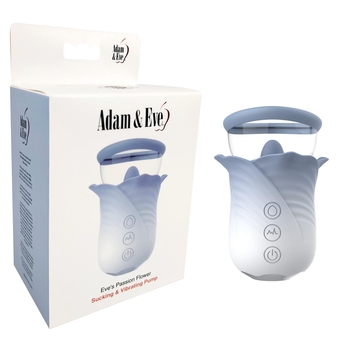
Finally, if one of you wants the sensation without dealing with the full backbend, a toy can easily carry some of the weight. Targeted oral vibrators are built specifically for that kind of stimulation, making them a great low-effort backup on nights when dragging out the chair feels like too much work.
Get your comfort layer sorted out first, grab your lube, and the rest is just deciding who's lying back.