What Is the Pile Driver Sex Position? (And Who It’s Actually For)
You have probably seen the pile driver mentioned in a pop-culture listicle or a late-night joke, and wondered if it is genuinely as intense as it looks.
In the pile driver sex position, the receiving partner lies on their back and folds at the waist, lifting their hips and legs up overhead (similar to a yoga plow pose). The other partner kneels or squats above and enters downward. Sometimes called the jackhammer, this versatile setup works for both vaginal and anal penetration.
A Workout for Both Partners
This position definitely asks for some effort from both people:
The Partner on Top: Does the heavy lifting by maintaining a low squat or deep kneel, powering the rhythm through their legs. This usually dictates how long the position lasts. The Partner Underneath: Carries their own weight in an inverted shape, leaning into their shoulders and upper back to hold the fold.
Why "Advanced" Just Means "Strenuous"
Plenty of guides file the pile driver under "advanced" and leave it at that, which doesn't tell you the whole story. That label is really about physical stamina rather than extreme flexibility. You don't need a rigorous yoga practice to fold your hips overhead for a few minutes, but you do need a solid surface, good balance, and a partner who can hold a stable squat without wobbling.
Fans of the position love the steep downward angle and the deep, intimate novelty of being folded up. Because of the physical toll, most people treat it as a short, intense highlight of the evening rather than the main event. When to Sit This One Out
If your neck or back gives you trouble, or if being upside down just doesn't sound fun, feel free to skip it entirely. You can get a similar depth with far less physical strain from positions like Legs Back Launch Pad and Bent Over, and you can browse every sex position guide at Adam & Eve to find a setup that matches your stamina.
Step-by-Step Guide: How to Get Into the Pile Driver Position Safely
Most of the work for this position happens before anyone goes upside down. Set up your support system first, and you will end up with an angle you can actually hold, adjust, and enjoy—rather than a two-second novelty that leaves you with a stiff neck.
Start on a firm surface with padding, not on a soft mattress. A mattress feels like the kinder choice, but it gives way unevenly under your shoulders while your head sinks further still, so the fold ends up happening at your neck instead of at your hips. A rug with a folded blanket, or a firm cushion under your shoulders and upper back, gives you a base that holds its shape while there's weight on it.
- Lie on your back on the padded surface with your shoulders and upper back supported, and check that your head is not dropping below the line of your shoulders.
- Lift your hips and legs up and back overhead, and let your partner help with the lift rather than leaving all of it to your core.
- Slide a wedge, ramp, or firm position pillow in behind your lower back and hips, so the prop holds the height instead of your muscles. This one change does more than anything else to turn the pile driver from a brief stunt into something you can actually stay in.
- Let your legs rest wherever they are comfortable. Both legs folded back toward your chest gives the deepest angle, and one leg over your partner's shoulder with the other leg open usually feels roomier.
- Your partner kneels or squats above you and lowers in slowly, finding the angle first and adding pace only once you both like where it is.
- Agree before anything starts on how either of you stops, whether that's a word, a tap on the leg, or a squeeze of the hand.
Why It Usually Ends Early
The partner on top is working against gravity the entire time, meaning this position usually wraps up because their legs get tired rather than because anyone lost interest. Knowing that in advance keeps a short session from feeling like a failure.
Test It Out Without Buying Anything
You don't need to purchase special gear to see if this position works for your body. The edge of a firm mattress, the arm of a sturdy sofa, or an ottoman can prop your hips at a similar height, making it easy to test out before investing in a dedicated position pillow or wedge.
Coming Back Down Safely
Exiting the position deserves just as much care as getting into it. Lower your hips slowly rather than letting them drop all at once, and give yourself a minute to rest before sitting straight up, as transitioning back from an inverted angle can sometimes leave you feeling briefly lightheaded.
Pile Driver Variations: Which Style Should You Try First?
Always start with the supported version. A lot of the common complaints about this position stem from trying the most intense, unpropped variation right out of the gate.
The options below are arranged from the least demanding to the most, letting you find a comfortable baseline before turning up the intensity.
- Supported pile driver. A wedge, ramp, or firm pillow sits under your hips and lower back and holds the height for you. It asks the least of your muscles and puts the least weight through your neck, which is why it's the one to try first.
- Partial angle. Your hips come up well short of vertical, so you keep much of the steeper angle while losing most of the inversion, and that makes it considerably easier to stay in.
- Against furniture. Your shoulders stay on the floor while your hips are propped against the edge of a bed, a sofa, or an ottoman. This gets you the height without buying anything.
- Shoulder stand entry. Here your weight sits on your shoulders and upper back with your hands supporting your hips. There is more core work and more load through your neck, so it tends to be the shortest-lived version.
- On your own. The same inverted setup works with a toy instead of a partner, and you control the angle and the pace entirely.
The partial angle is the step most guides skip entirely, but it is well worth trying before jumping straight into the full version. By raising your hips well short of a full vertical lift, you still get a great deep angle while eliminating that dizzy, head-down sensation. This means less pressure in your head and plenty of time to figure out if you actually enjoy the feeling. You might find you love it right there—in which case, going higher is just an optional bonus. If it doesn't do much for you, you've figured that out without anyone straining a muscle.
Where your legs go changes the entire experience more than you might expect:
Both legs folded back toward your chest: This gives you the maximum depth and plenty of hip compression. Some people love the closeness, while others find it a bit too intense right out of the gate.
One leg over your partner’s shoulder (with the other open): This leaves you more room to move and breathe, making it the more comfortable choice as a starting point while you figure out your preferences.
Neither option is "correct"—they simply offer two completely different styles of connection.
Knowing When to Pivot
Start with the supported version, and if it still isn't for you, that is a total win rather than a disappointment. Knowing what your body does and doesn't like saves a lot of guesswork, and there are plenty of other positions that deliver fantastic depth with a fraction of the effort. Lazy Doggy and Scissoring Spoon give you depth and closeness with almost none of the effort, and Thigh Master keeps a steep angle while letting whoever is on top set the pace. More positions in the same family sit in the Kama Sutra positions at Adam & Eve.
How to Make the Pile Driver Position Safer
The biggest thing to protect in the pile driver position is your neck. Inverted, neck-loaded positions can put significant strain on the neck and spine, so keep the padding under your shoulders—not your head—and avoid forcing your neck forward. Your head should stay as close to a neutral, comfortable position as possible. If you already have neck or back problems, this is a position to skip or discuss with your clinician first.
You may also notice a head rush or light-headed feeling when you're upside down. That's not something to push through. Research on full-body inversion has found that being head-down can increase pressure in the head and eyes, and researchers have advised people with conditions such as glaucoma to avoid inverted positions. A brief sexual position isn't the same as sustained full-body inversion, but if you have glaucoma, elevated eye pressure, poorly controlled blood pressure, or a history of fainting, check with your clinician before trying an inverted position.
And remember: deeper isn't automatically better. The pile driver creates a deep angle, but depth should never be the goal. Start slowly, communicate about what feels comfortable, and reduce the depth or stop completely if either partner wants to.
Watch your positioning
Because the receiving partner is above and gravity can make movement less stable, it's easy to lose alignment or slip out. That's when rushing can become a problem. If you lose penetration, stop and reposition rather than trying to reenter by feel or at speed. Penile fractures are associated with forceful or poorly controlled movement during sex, so deliberate movement matters even though there isn't a specific injury rate for the pile driver position.
Use plenty of lubricant
If you're doing the pile driver with anal penetration, lubricant is essential. The anus doesn't produce its own lubrication, and insufficient lubrication or rushing can increase the risk of pain and injury. Add more whenever things start to feel dry or uncomfortable, and stop if pain increases. Using condoms? Choose a water-based lubricant with latex condoms. Oil-based lubricants can weaken latex and increase the chance of condom breakage.
Talk before you try it
A quick conversation beforehand can make this position much easier to manage. Agree on what feels good, how deep is comfortable, and what either person will say or do if they want to stop. Consent is ongoing and can change at any point, so simple check-ins such as “Is this okay?” or “Do you want me to stop?” are completely appropriate.
Because the partner underneath may have limited mobility or difficulty speaking in this position, agree on a hand signal or tap beforehand too. That gives them an easy way to communicate if they need to stop immediately.
When to stop the pile driver position
Don't try to push through warning signs. Come out of the position slowly if either partner develops:
- Increasing dizziness or light-headedness
- Tingling or numbness in the legs or feet
- Neck pain
- Pressure or pain behind the eyes
- Sharp, persistent, or otherwise concerning pain
You don't need to justify stopping. If something feels wrong, stop, come down carefully, and reassess.
What to Know Before Trying the Pile Driver Position
Before trying the pile driver, think less about flexibility and more about comfort, support, and control. You don't need to be exceptionally flexible, but the position does require a fairly deep hip angle. Start with a smaller range of motion and see how your body responds rather than trying to match an exaggerated version from a photo.
The surface underneath you matters, too. A very soft mattress can let your shoulders and head sink, making it harder to keep your neck in a comfortable position. If you're using a bed, staying closer to the edge can give your shoulders more stable support. A firm cushion under the shoulders can help, but your head and neck shouldn't be carrying the weight.
If you're using the position for anal penetration, lubrication and a slow start are essential. The angle can make it harder to see your partner's face or read their body language, so communicate more than you normally would. If something hurts, don't assume you need to adjust to it; change the angle, slow down, or stop.
This isn't a position you need to hold for a certain amount of time, either. It can be physically demanding, particularly for the partner supporting their weight with their legs, hips, and core. Treat it as one part of sex rather than an endurance test, and switch positions when either person gets tired.
The same goes for feeling lightheaded. A brief dizzy feeling can happen when you're partially inverted, but it shouldn't keep building. Come out of the position slowly if you feel increasingly dizzy, develop pressure behind your eyes, notice numbness or tingling, or simply don't feel right.
Ultimately, the pile driver works best when your body—not the picture—is setting the limits. Keep pressure off your neck, use enough support, start gradually, and don't force the angle just because the position is supposed to look a certain way.
Position Pillows, Wedges, and Lube Worth Having Nearby
For the pile driver, two things are genuinely useful to have within reach: a firm position aid and plenty of lubricant. The right support can make a bigger difference than trying to perfect the position itself, because it helps keep your hips elevated without making your neck do the work. Look for a wedge, ramp, or position pillow that is firm enough to support your weight without collapsing. Height matters, too. You want enough lift to make the angle comfortable without pushing your hips so high that your neck or back ends up in a strained position.
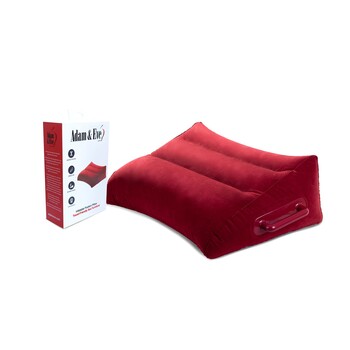
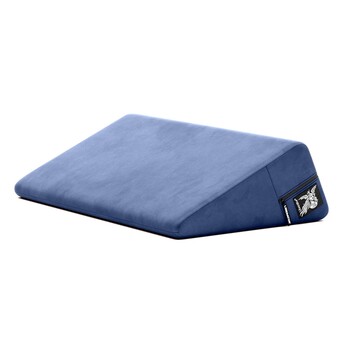
For an adjustable option, the Adam & Eve Inflatable Position Pillow lets you change the height and firmness to suit your body and the surface you're using. If you'd rather have a fixed shape, a Liberator Wedge or ramp can provide more stable support. A wedge gives you a compact lift, while a ramp provides a longer incline.
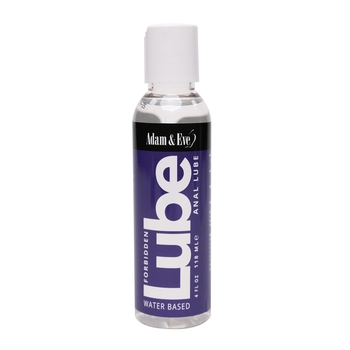
Then there's lube. Keep it somewhere you can reach easily rather than having to interrupt things to find it. If you're using latex condoms, choose a water-based lubricant, since oil-based lubricants can weaken latex. For anal penetration, use a lubricant designed for anal sex and add more whenever things start to feel dry or uncomfortable.
Adam & Eve's own range includes Adam & Eve Personal Lubricant for general use and Adam & Eve Toy Lubricant when toys are involved. You don't need a drawer full of products for this position; a position aid and the right lubricant are the two pieces worth having ready.