Updated
Why Premature Ejaculation Happens
Premature ejaculation rarely comes down to one single cause. Current clinical guidance describes it as the result of several factors working together. The International Society for Sexual Medicine (ISSM) defines it as a pattern of ejaculation that almost always happens within about a minute of penetration and causes real personal distress. But what causes it is a separate question. A 2024 guideline comparison covering major urology and sexual medicine organizations reports that "no biological factor has been shown to be causative in the majority of men with PE."
That might sound unsatisfying if you were hoping for a simple explanation, but it also means this is something common and explainable, not a personal failing. Body chemistry, genetics, psychological state, relationship context, and physical health all appear to play a role for different people, and the particular mix that matters for you may look nothing like the one that matters for someone else. The next section breaks down what's actually known about each piece.
Is Premature Ejaculation Physical, Psychological, or Both?
Both, usually, and the research suggests the two are often intertwined rather than separate boxes to check.
Brain chemistry and signaling. Differences in the brain's serotonin signaling, and how sensitive certain receptors are, appear to affect how much control a person has over ejaculation timing, according to a 2019 review in the Asian Journal of Andrology. Lower or less consistent serotonin activity is linked to reduced control, though the relationship is complex and varies between individuals.
Genetics. The same review found that genetics account for roughly 30 percent of the variation in premature ejaculation between individuals, but researchers haven't pinned down one responsible gene. Associations with specific genetic variants have turned up in some studies, but results differ across populations, so genetics looks like one contributing factor among several, not a fixed, predictable cause.
Psychological and relationship factors. Performance anxiety is considered a primary contributor for many people. Cleveland Clinic lists stress, relationship problems, depressive thoughts, guilt, and self-esteem or body-image concerns as common psychological contributors too. They're the same everyday pressures that show up elsewhere in sexual response.
Physical health. The same source also names erectile dysfunction, hormonal imbalances, penile hypersensitivity, and prostate inflammation as physical contributors. The 2024 guideline comparison adds obesity, diabetes, metabolic syndrome, low physical activity, and poor sleep quality as associated risk factors in current clinical guidance. If erectile difficulty is part of your picture, it's worth reading about what causes ED as well, since the two can overlap.
For some people, this pattern has been there since their very first sexual experiences. For others, it's a change from what was typical before. This often points toward something more situational, like stress, a new relationship dynamic, or a physical health change worth mentioning to a doctor. Either way, it's rarely just one thing.
Techniques, Products, and Professional Care Options
There are several different ways to approach the issue of premature ejaculation, and it helps to know what the evidence actually supports before you try any of them.
The stop-start and squeeze techniques. These involve pausing stimulation, or lightly squeezing the head of the penis, just before ejaculation, then resuming once the urge passes. According to informedhealth.org, published by Germany's Institute for Quality and Efficiency in Health Care, "there is no good-quality research on how well these techniques help to reduce premature ejaculation." One small study found that practicing them increased time to ejaculation by a few minutes after twelve weeks of use. That suggests it could work for some, but isn't a dependable fix.
Pelvic floor exercises. The same source reports that pelvic floor exercises increased time to ejaculation by half a minute to two minutes on average in one study. The evidence base is similarly limited here, but the exercises carry little downside if you want to try them.
Condoms and topical anesthetics. ISSM names condoms and topical anesthetic products as approaches people and clinicians use to reduce penile sensitivity, which can in turn extend time before ejaculation. These work to reduce sensation without addressing any underlying cause(s) directly.
Masturbating beforehand or slowing down during foreplay. The site informedhealth.org notes that some people find it helpful to masturbate before partnered sex or slow the pace during foreplay. This is anecdotal self-help rather than a studied technique, but it's a method anyone can try.
What a doctor may discuss. Current clinical guidelines from major urology and sexual medicine organizations also name prescription-level options, including certain antidepressant medications taken daily or on an as-needed basis before sex, and stronger numbing creams or sprays available only by prescription. These approaches should be worked through with a healthcare provider based on your health history, and aren't something to start on your own. As informedhealth.org puts it, "the suitability of any of the described options in an individual case can be determined by talking to a doctor."
Partner Communication and Comfort
You shouldn't feel as if you have to carry your concerns alone. Plenty of people worry about how a partner will react, but premature ejaculation is very common; it's an ordinary thing to talk about and share with them.
There's also no right way to bring it up. Some people prefer to mention it before or after sex. Others find it easier to talk about outside the bedroom entirely, when there's no pressure to perform in the moment. What matters more than the exact words is treating it as a shared, ordinary topic rather than something to apologize for or hide.
Comfort during sex itself can also come from simply slowing the pace, talking about what feels good as you go, and remembering that intimacy includes a lot more than the timing of any one moment.
It's Common, and Rarely Has Just One Cause
One of the most common misunderstandings about premature ejaculation is that it's rare, or that it means something is wrong with you. It's actually a common, well-understood experience: Cleveland Clinic estimates that it affects about 1 in 5 people between the ages of 18 and 59. That figure sits inside a much wider range reported elsewhere: the 2019 Asian Journal of Andrology review found estimates across different studies running from 20 percent to 75 percent, depending on how researchers defined and measured it.
It's also worth repeating that no single cause explains most cases. Genetics plays a measurable but partial role, around 30 percent of the variation between individuals by current estimates, and no one biological factor has been identified as the cause for most people. Psychological state, physical health, and body chemistry all factor in too, which is part of why what helps one person may do little for someone else.
If early ejaculation happens most of the time and it's causing distress to you or a partner, that's a reasonable point to talk with a healthcare provider. A doctor can look into physical contributors, walk through options suited to your situation, and help you figure out next steps without judgment.
Stamina, Comfort, and Delay Products at Adam & Eve
If reducing sensitivity is the approach that makes sense for you, Adam & Eve carries a few non-prescription options worth knowing about.
The Adam & Eve Marathon Delay Serum contains 7.5% benzocaine, a topical numbing ingredient, applied to the head and shaft of the penis. Its product listing describes it as working within 2 to 3 minutes to reduce sensitivity, the same general approach ISSM names when it describes topical anesthetics as a way to extend time before ejaculation. It's a comfort product built around reducing sensation and it isn't the same thing as the prescription-strength options a doctor might discuss.
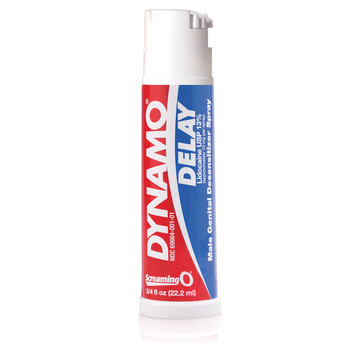
Adam & Eve also carries delay sprays, wipes, and gels in the same category, including the Dynamo Delay Spray, Dynamo Wellness Delay Wipes, and Take It Slow Delay Gel, if you want to compare different formulations and methods of application.
If you're interested in practicing the stop-start technique described earlier, a solo-use masturbator built for that kind of practice, like the Fleshlight Stamina Trainer Value Pack or the Adam & Eve Bangin' Betty Stroker, can give you a private, low-pressure way to work on starting and stopping on your own schedule.
Whatever mix of causes applies to you, you don't have to sort it out alone, and you don't have to hunt through a shelf of products to find something that fits what you're looking for. Shop lubes and sexual wellness to see comfort, lubrication, and delay options together in one place.