Updated
What Men May Find Hard to Talk About Sexually
Talking about sex isn't always easy, even in a close relationship. Some people worry about how their partner might react to things they'd rather keep private, whether it's their pornography habits, a past sexual experience like a threesome, or an emotional connection that crossed a relationship boundary. Research involving college-age adults has explored these kinds of disclosures, offering insight into what people may choose to keep to themselves and why.
Often, the hesitation comes down to fear of judgment, conflict, or hurting someone they care about. That doesn't automatically make keeping a secret harmless, and it doesn't mean every private experience needs to be shared. What matters can depend on the nature of the information, the agreements you've made as a couple, and whether the secret affects your partner or your relationship.
Bringing up a sensitive subject can feel daunting, but an honest conversation can create an opportunity to better understand each other. Reactions will vary, and not every discussion will go smoothly. Approaching the topic with openness, respect, and a willingness to listen gives both partners a better chance to talk through it.
Why Some Men Keep Secrets and What Can Happen When They Open Up
Sometimes, the hardest part of sharing something personal isn't the subject itself. It's worrying about how a partner might react. Will they judge you, see you differently, or pull away? Those fears can make a sensitive topic feel easier to avoid than to bring up, even when keeping it to yourself creates its own stress.
Research on sexual secrets offers a reassuring perspective. In one study of college-age adults, people who shared a long-held sexual secret often described their partner's response as appreciative or relieved rather than disapproving. Fewer than one in ten of these disclosures were followed by the relationship ending.
That doesn't mean every conversation will go smoothly or that every secret needs to be shared in the same way. The findings reflect the experiences of a specific group, not a guarantee of how any partner will respond. Still, they suggest that fear of the worst-case scenario doesn't always match what happens in real life. When both partners can talk openly and listen without rushing to judgment, a difficult conversation can become an opportunity to understand each other better.
The Secrets Men Keep Most Often
So, what kinds of things do men tend to keep to themselves when it comes to sex? Research points to a few common themes:
Pornography use and fantasy. How often someone watches porn, or what they're drawn to, is one of the most frequently withheld topics, the kind of thing partners rarely ask about directly and men rarely bring up first.
Past-partner history. A previous threesome or a similar experience from before the current relationship shows up often enough in the research to count as common, not unusual. Keeping it private tends to be about not wanting to invite comparison or judgment, not about hiding something ongoing.
Current desire and masturbation habits. This is where the most variation shows up, and also where the most unnecessary worry tends to live. There's no single "normal" masturbation frequency for men. Some do it most days, some a few times a month, and some rarely at all, according to the International Society for Sexual Medicine. The society's own guidance is that it's worth bringing up with a healthcare provider or a sex therapist only when the habit becomes compulsive, starts interfering with work, social life, or relationships, or causes physical irritation, not simply because it happens often.
Changes in sexual desire are another thing people may hesitate to talk about, but they're more common than you might think. In a national survey of sexual attitudes in Britain, about 15% of men reported experiencing at least three months of low sexual interest in the previous year. For women, the figure was about 34%, and roughly half of the men who experienced low desire said it caused them distress.
The important thing to remember is that a drop in sex drive doesn't automatically mean something is wrong with you or your relationship. Desire can fluctuate, and if the change is bothering you, talking openly with your partner can be a helpful place to start.
Talking About Sex Without Guesswork
Talking openly about sex can be easier when neither person has to guess what the other is thinking or feeling. Research involving college students found differences in how men and women reported communicating sexual consent, with women tending to rely more on verbal cues and men more on nonverbal signals. The researchers highlighted the value of direct verbal communication, rather than relying on body language alone.
That advice is useful beyond the moment of intimacy. If you want to discuss a sexual experience, share something you've kept private, or talk about a change in desire, be clear about what you want to say and give your partner room to respond honestly. They may be ready to talk, need time to think, or prefer not to discuss it at all. Respecting that response helps keep the conversation open without turning it into a source of pressure.
Open communication may also play a role in sexual well-being. The large survey mentioned earlier found that people who communicated openly about sex and felt emotionally close to their partner during sexual experiences were less likely to report an extended period of low desire. That doesn't mean talking will automatically change anyone's sex drive, but feeling comfortable enough to be honest with each other can be valuable in its own right.
Give the Conversation Room to Unfold
Bringing up something personal about sex can feel awkward, even with someone you trust. Your partner might be surprised, need time to think, or have questions you hadn't anticipated. That's okay. An unexpected reaction doesn't automatically mean you've said the wrong thing or that the conversation has gone badly.
Research on sexual disclosure suggests that sharing a long-held secret can go better than people expect, although every relationship is different. Try to approach the conversation with an open mind rather than planning for a particular response. The goal isn't to get the perfect reaction; it's to give both of you a chance to be honest and understand each other better.
The same goes for changes in sexual desire. If a difference in interest is affecting you or your relationship, talking about it can help you understand what's going on without jumping to conclusions about what it means. You don't have to resolve everything in one conversation, either. Sometimes, the most productive first step is simply opening the door to a discussion you can continue together.
Explore Sexual Wellness at Your Own Pace
Getting more comfortable talking about sex can also help you figure out what you enjoy, whether you're exploring on your own or trying something new with a partner. If you're curious about products that can make those experiences more comfortable or enjoyable, Adam & Eve has several options to explore.
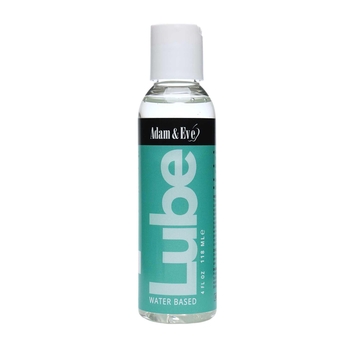
For everyday comfort, Adam & Eve Lubricant is a water-based option. If you're looking for something specifically for solo play, Adam & Eve Masturbation Lubricant is formulated for that purpose. For couples who want to experiment together, the Screaming O Vibrating Ring adds vibration to partnered play, while the Adam & Eve Bangin' Betty Stroker offers another option for solo exploration.
There's no single right way to approach sexual wellness. Browse the full lubes and sexual wellness collection to explore the options and find what feels right for you.